


Coordinate every step of the legal case lifecycle
A clear workflow reduces uncertainty around who must review, what document is pending, and which cases are ready for the next action.


Legal workflow automation connects the steps that usually live in separate tools: document intake, data extraction, review, document generation, follow-up, and reporting. Remotjob gives teams a controlled lifecycle for repetitive legal cases.
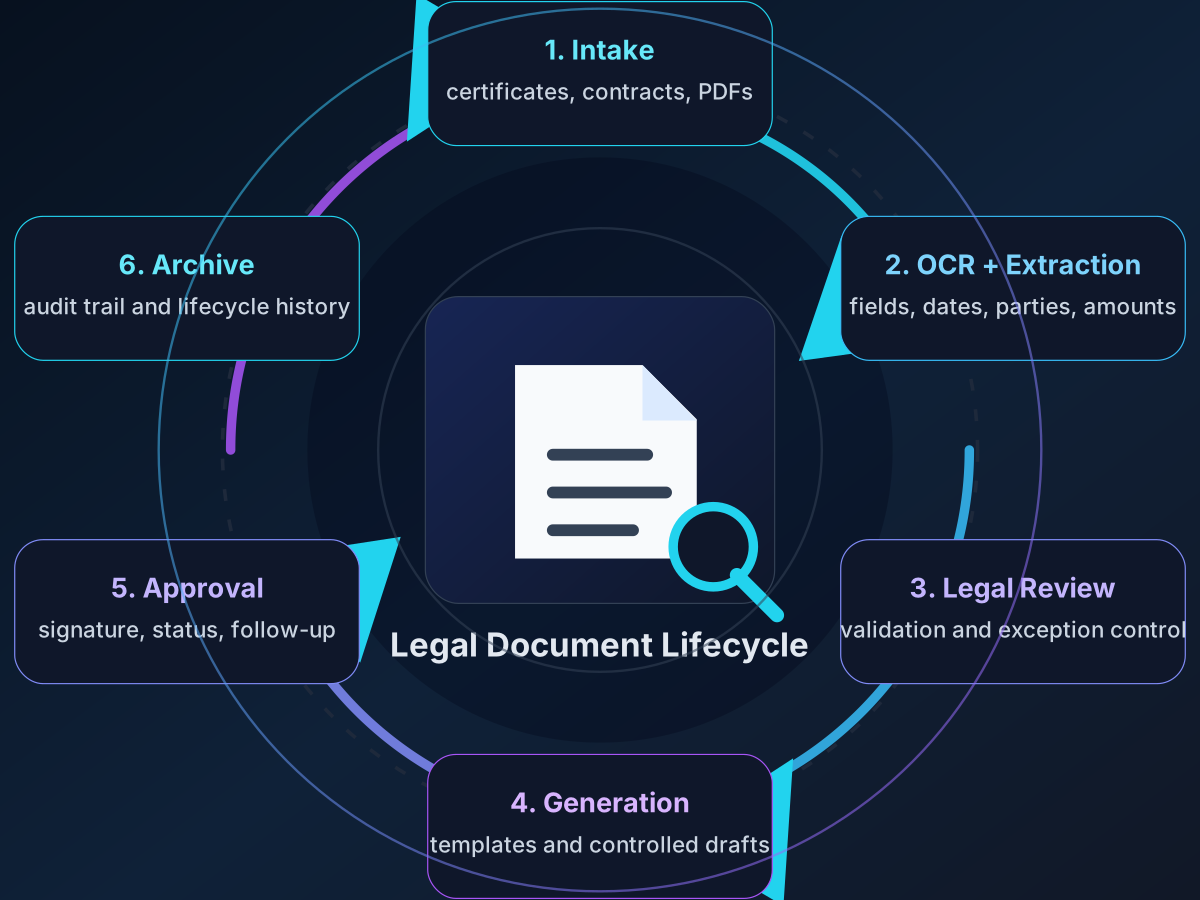
A clear workflow reduces uncertainty around who must review, what document is pending, and which cases are ready for the next action.
The platform is designed for repeatable legal operations, especially cases where document processing and status visibility are critical.
Create a repeatable path from intake to review, generation, follow-up, and closure.
Keep source files, extracted fields, and generated outputs linked to the same case.
Track what is pending, reviewed, generated, escalated, or resolved.
Use visibility to improve capacity planning and operational decisions.
Follow legal cases through operational states with clear status history.
Keep professional validation inside the automated process.
Tie each action to source documents and generated files.
Understand volume, delays, and throughput across the legal operation.
Teams know where each case stands and what must happen next.
Traceability supports internal review and process discipline.
Leaders can plan legal operations based on visible queues and statuses.
Legal workflow automation is the coordination layer around the case lifecycle. It defines what happens after a document enters the operation, who needs to review extracted information, when a document should be generated, which state a case is in, and how progress should be reported. This matters because legal teams often have the right documents and knowledge, but the process still depends on informal follow-up, manual reminders, and disconnected status lists. A workflow makes the process visible and repeatable. It does not replace legal judgment; it ensures that routine steps, evidence, documents, and responsibilities are organized so judgment can happen with better context.
Specialized capability
Start with the complete legal automation overview, then explore the capabilities that matter most for documents, processing, collections, and legal workflow control.
Legal automation software for document intake, OCR, AI data structuring, debt collection workflows, lawsuit document generation, and case traceability.
Specialized capabilityAutomate legal document assembly with structured case data, templates, review checkpoints, and traceable document generation for high-volume legal teams.
Specialized capabilityUse AI legal document processing to extract, structure, and review data from debt certificates and legal files before document generation and case tracking.
Specialized capabilityAutomate debt collection workflows with document intake, debt certificate processing, legal document generation, status tracking, and operational visibility.
It connects document automation, review, status control, follow-up, and reporting so the legal operation can move cases predictably.
No. It connects document automation with review, status control, follow-up, and reporting.
Legal operations and collections teams that manage many similar cases and need visibility across the lifecycle.
Connect intake, processing, document generation, review, and reporting in a repeatable legal case lifecycle.
Send message